


The Importance of Medical Record Indexing in Modern Healthcare Systems
Understanding Medical Record Indexing in Modern Healthcare Practice
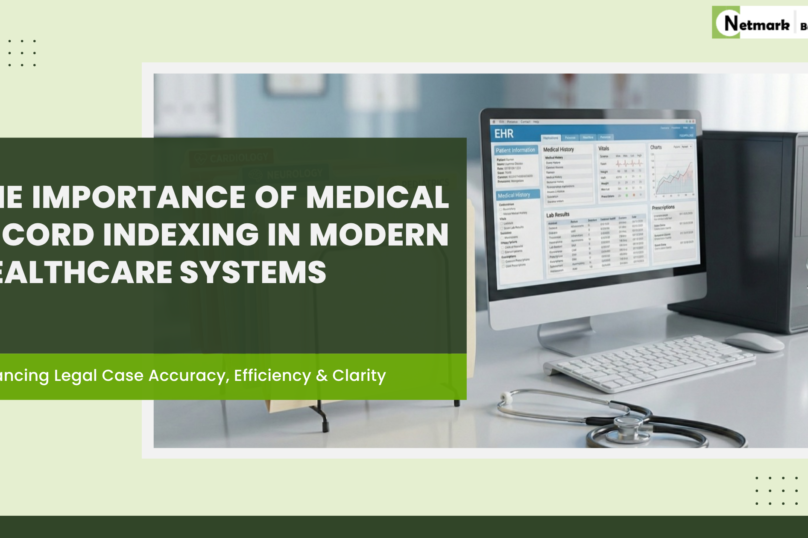
Medical record indexing is the process of organizing and categorizing patient health documents into a structured, searchable system. It transforms unstructured healthcare data—such as lab reports, physician notes, imaging results, prescriptions, and discharge summaries—into an easily retrievable format that supports both clinical and administrative decision-making.
In modern healthcare systems, where patient data is generated continuously across multiple departments, indexing ensures that critical information is not lost in fragmented documentation. For organizations using a professional Medical Record Indexing Service, this process significantly improves data accessibility, reduces retrieval time, and enhances overall operational efficiency.
For law firms and healthcare administrators, indexed records also improve case preparation and compliance review by providing a clear, structured view of patient history without manual sorting through hundreds of pages.
How Medical Record Indexing Works in Healthcare Systems
Medical record indexing works by assigning structured identifiers, tags, and categories to different types of medical documents. These may include diagnosis reports, treatment notes, operative records, laboratory results, and billing documents.
The process typically involves document intake, classification, data tagging, and digital storage within a secure system. Once indexed, records can be retrieved instantly based on keywords, patient identifiers, dates, or medical categories.
When integrated with a structured medical document organization workflow, healthcare providers can significantly reduce administrative workload and improve coordination between departments.
NetmarkMedRec applies a hybrid approach that combines trained human reviewers with structured processes to ensure accuracy and consistency in indexing outcomes.
Importantly, indexing does not alter medical content—it organizes it. The goal is to improve accessibility and usability without changing clinical meaning or integrity.
Why Medical Record Indexing Matters in Healthcare and Legal Workflows
Medical records often span years of treatment across multiple providers, making manual review inefficient and error-prone. A well-implemented medical record indexing service ensures that all documents are logically arranged, allowing faster retrieval of critical medical information.
In healthcare settings, this improves continuity of care by enabling physicians to quickly access complete patient histories. It also reduces the risk of medical errors caused by missing or overlooked documentation.
For legal professionals handling injury and malpractice cases, structured records play a crucial role. Medical Record Indexing for Law Firms helps attorneys and paralegals quickly identify key evidence such as injury timelines, diagnostic findings, and treatment progression.
For example, in a long-term injury claim, indexing helps legal teams immediately locate physiotherapy notes, imaging reports, and specialist consultations, making case evaluation significantly faster and more accurate.
Accuracy, Compliance, and Operational Challenges in Indexing
Despite its benefits, medical record indexing requires strict accuracy and standardization. Inconsistent labeling or classification can lead to retrieval errors and incomplete case analysis. This is why structured workflows and trained professionals are essential for maintaining quality.
Compliance is another critical factor. Healthcare data must be handled under strict privacy regulations, ensuring secure storage, controlled access, and proper audit trails. Any indexing system must align with regulatory frameworks governing patient confidentiality and data protection.
Operationally, organizations must also manage large volumes of incoming data from multiple sources. Without a standardized indexing system, records can become fragmented, leading to inefficiencies in both healthcare delivery and legal review processes.
The Role of NetmarkMedRec in Medical Record Indexing Solutions
NetmarkMedRec is a trusted provider of medical record review services for law firms and legal professionals. Based in Cincinnati, Ohio, the company has nearly 20 years of experience and serves clients throughout the United States.
Their expertise ensures that complex medical data is transformed into structured, usable formats that support both clinical clarity and legal case preparation.
By combining industry knowledge with structured workflows, NetmarkMedRec delivers accurate, timely, and reliable documentation support across healthcare and legal sectors.
Practical Value for Healthcare Providers and Law Firms
Medical record indexing delivers practical value across both healthcare and legal ecosystems. In healthcare, it improves patient care coordination, reduces documentation delays, and enhances decision-making efficiency.
In legal workflows, it accelerates case review, strengthens evidence organization, and improves the ability to analyze medical histories effectively.
As medical data continues to grow in complexity, structured indexing systems are becoming essential for ensuring that critical information remains accessible, reliable, and actionable.
Need expert medical record review services? Contact NetmarkMedRec today for accurate, timely, and cost-effective solutions tailored to your case needs.